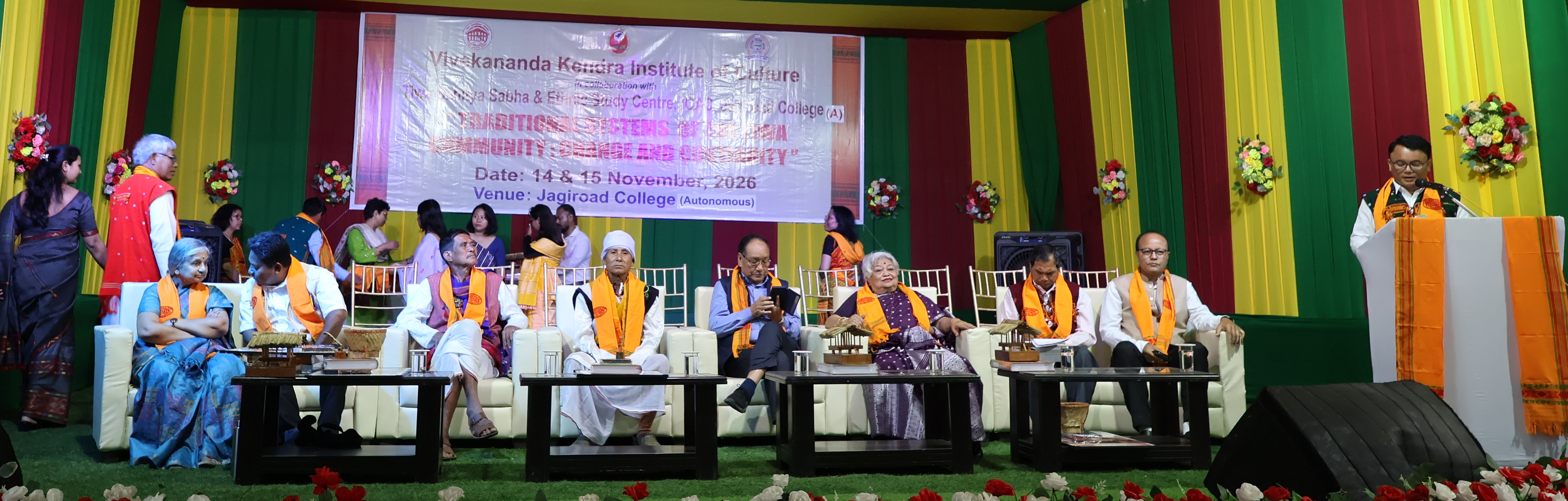
 Vivekananda Kendra Institute of Culture (VKIC), in collaboration with Tiwa Sahitya Sabha (Tiwa Mathonlai Tokhra) and the Ethnic Study Centre, IQAC, Jagiroad College (Autonomous), successfully organised a two-day Community Seminar on “Traditional Systems of the Tiwa Community: Change and Continuity” on 14 and 15 November 2026 at Jagiroad College campus. The seminar aimed to provide a common platform for community elders, scholars, researchers, academicians and students to discuss, document and understand the traditional knowledge, customs, institutions and cultural practices of the Tiwa community. It also sought to explore how these traditions have continued, adapted and evolved over time.
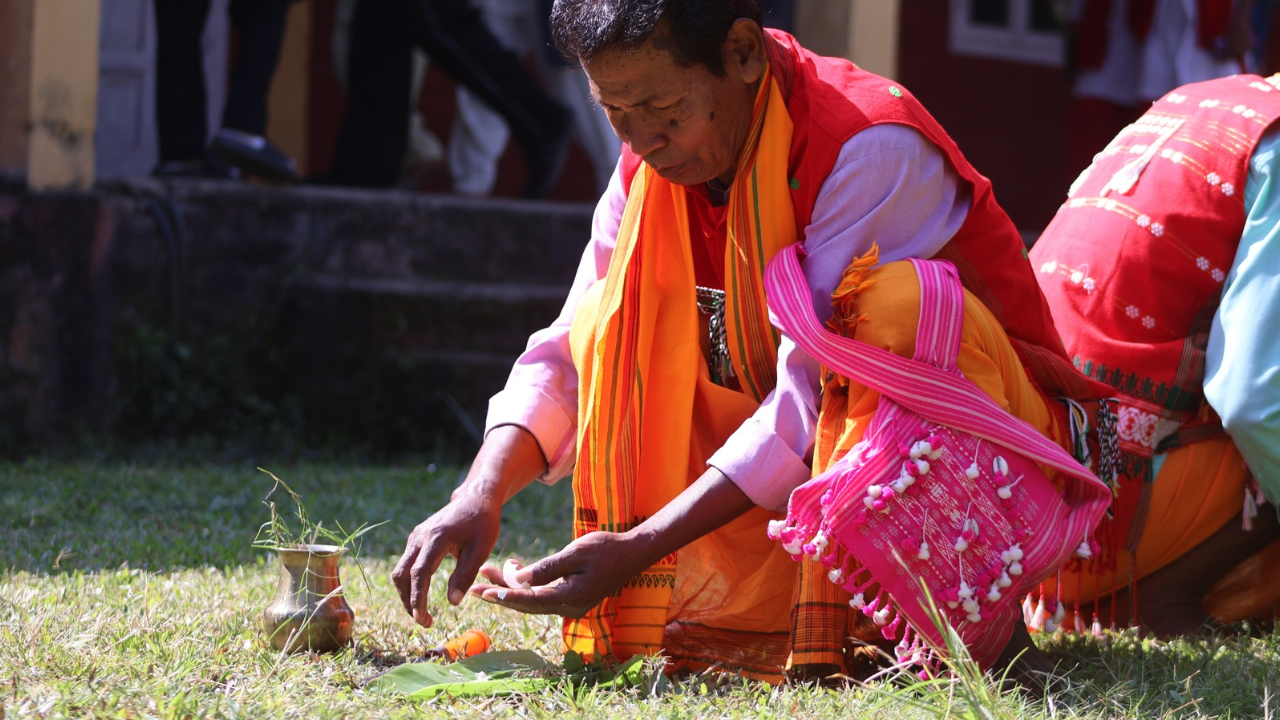
The seminar began with an inaugural session marked by traditional Tiwa rituals, including the ceremonial breaking of eggs and the chanting of traditional mantras by seven Tiwa priests. The ritual reflected the rich spiritual and cultural heritage of the Tiwa community and formally marked the beginning of the programme. As a mark of respect for the traditional Tiwa kings and the distinguished guests, the organising institutions felicitated them during the session. The dignitaries present included Sri Harsing Kholar, President of Tiwa Sahitya Sabha; Mananiya Nivedita Raghunath Bhide, President of Vivekananda Kendra Kanyakumari and Vivekananda Kendra Rock Memorial, Kanyakumari; Dr. Joram Begi, Chairman, Vivekananda Kendra Institute of Culture, Guwahati; Prof. Shiela Bora, Director, Vivekananda Kendra Institute of Culture, Guwahati; Prof. Bhaben Chandra Neog, Principal, Jagiroad College (Autonomous); Assam Saurav awardee Guru Nadirum Dewri; and Sri Jursing Bordoloi, President of Tiwa Rajdarbar.
Sri Jayanta Kumar Manta, Associate Professor, Department of Botany, Handique Girls College, delivered the keynote address at the inaugural session. His insightful presentation focused on the traditional systems of the Tiwa community, highlighting the importance of understanding both change and continuity in its social and cultural life.
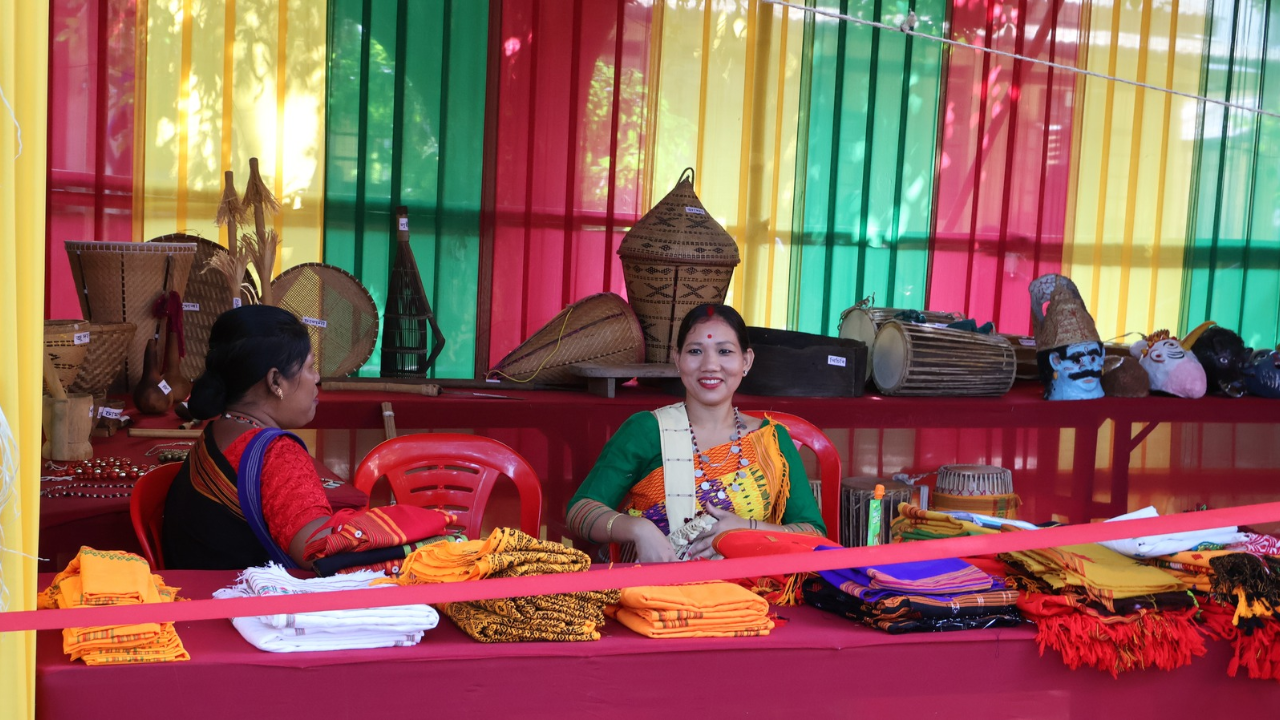
Following the inaugural session, an exhibition showcasing the material culture of the Tiwa community was organised. The exhibition displayed traditional dresses and ornaments, varieties of traditional food, Masks, bamboo and basketry products, agricultural implements and traditional weapons. It also demonstrated the different stages of silk production, from silkworm rearing to the preparation of threads and weaving, along with the traditional process of natural dyeing. The exhibition provided visitors with an opportunity to understand the traditional skills, craftsmanship and livelihood practices of the community. It was inaugurated by Assam Saurav awardee Guru Nadirum Dewri, an eminent cultural preservationist of the Tiwa community.
Following the exhibition, two parallel technical sessions were conducted, with a total of eight research papers presented on the first day. Technical Session- I was chaired by Sri Dipendranath Bardoloi. The papers presented in this session covered various aspects of Tiwa history, life-cycle rituals, traditional beverages and their medicinal value, and the traditional lyrical literature of the Tiwa community. The presentations were made by scholars, professors and intellactual members of the community.
Technical Session-II was chaired by Sri Santanu Bardoloi. The papers discussed the death rituals of the Tiwa community, traditional institutions and customary justice with special reference to change and continuity, the significance of Borghor in maintaining the customs of the Puru-wali clan, and the role of traditional knowledge and oral folk literature in ensuring cultural continuity. Both technical sessions were followed by interactive discussions in which scholars, researchers and community members shared valuable information, observations and suggestions. These discussions made the sessions meaningful, informative and constructive.
The first day of the seminar concluded with a colourful cultural programme conducted by Guru Nadirum Dewri and his group. Beginning with a Tiwa chorus, the programme featured five different traditional folk dances representing the various livelihood practices, life skills and cultural expressions of the Tiwa community. The programme ended with another chorus performance, offering the audience a memorable experience of Tiwa folk traditions.
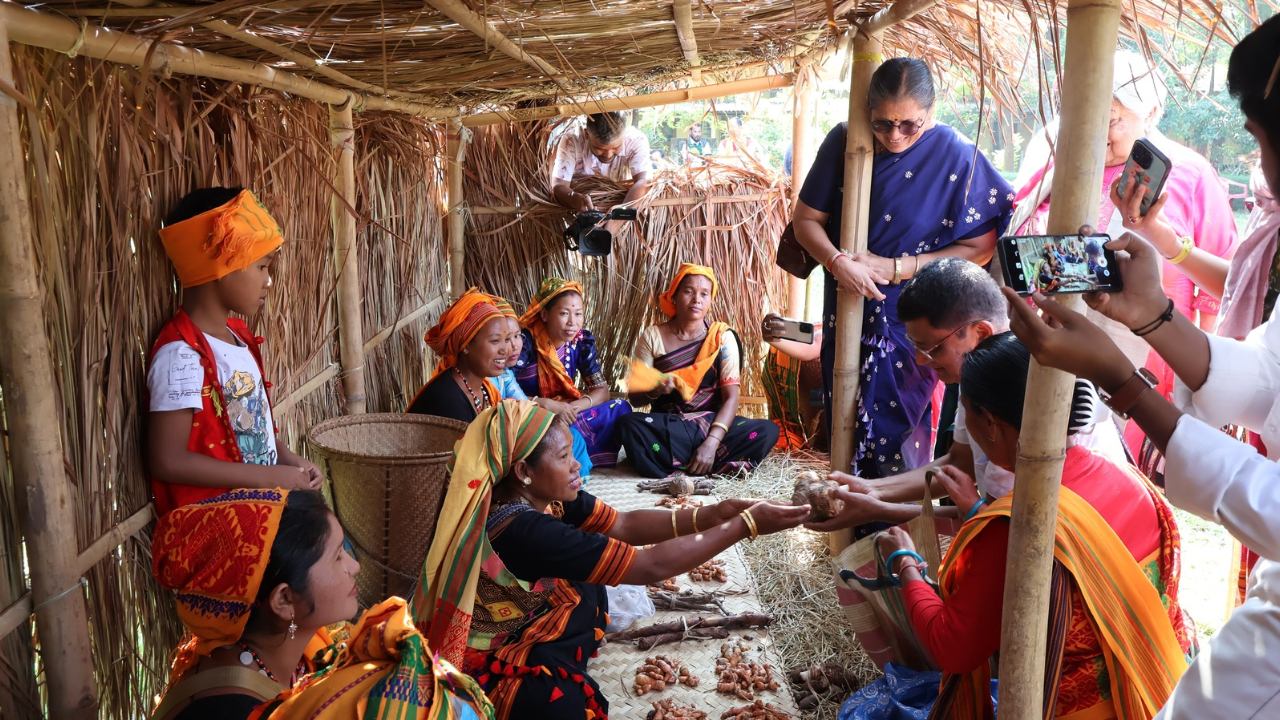
The second day of the seminar began with a symbolic replication of the traditional Junbil Mela under the leadership of Sri Jursing Bordoloi and his team. Women from Karbi Anglong brought vegetables cultivated through jhum farming and exchanged them with people from the plains. The barter exchange included traditional food items such as rice cakes and sandoh (roasted rice powder). This activity recreated the traditional barter system associated with the historic Junbil Mela, which is held during the Assamese month of Magh (January). The mela represents an important tradition associated with the Tiwa kings of the Jagiroad region and continues to reflect the age-old economic and cultural relationship between the hill and plain communities. The demonstration offered participants a practical understanding of the traditional system of exchange and the social relationships that it sustains.
Following the Junbil Mela activity, two parallel technical sessions were conducted. Technical Session I was chaired by Sri Jugeswar Bardoloi. The papers presented in this session covered topics such as the Tiwa marriage system, the practice of Hari Kunwori, gender concerns and identity among the Tiwa community, and the traditional folk religion of the community. Eminent researchers, scholars and students participated in the session and discussed various aspects of Tiwa social and religious practices.
Technical Session II was chaired by Dr. Bidyut Bikash Senapati. The presentations covered different aspects of Tiwa culture, including festivals and their significance among the plains Tiwa, the role of regional Tiwa organisations in the development of the community, and the traditional musical instruments of the Tiwa people. The papers were presented by experts, researchers and professors working in different fields. Both sessions concluded with interactive discussions in which subject experts and participants shared their views, suggestions and observations. These exchanges helped deepen the understanding of various aspects of Tiwa society and culture.
The two-day seminar concluded with a valedictory session chaired by Mananiya Nivedita Raghunath Bhide, President of Vivekananda Kendra Kanyakumari and Vivekananda Kendra Rock Memorial. The session began with the screening of a short film titled Crossroads, directed by Uday Bhaskar Patar. A documentary on Junbil Mela, directed by Dr. Mansh Jyoti Bardoloi, was also screened, highlighting the cultural significance of this practice. Sri Jyotirmoy Bardoloi presented a comprehensive report of the activities and discussions held during the two-day seminar.
In her valedictory address, Mananiya Nivedita Raghunath Bhide highlighted the objective of Vivekananda Kendra Institute of Culture in empowering Janajati communities to move forward with confidence and pride in their traditions while embracing necessary changes. She emphasised that communities should not blindly imitate Western culture but should remain rooted in their own cultural values and knowledge systems. She stressed the importance of preserving indigenous languages, beliefs, deities, rituals and cultural philosophies while remaining open to renewal and inclusiveness. She also highlighted the need to maintain a close relationship with Mother Earth and recognise the common values that unite different communities. Concluding her address, she expressed that the seminar should not be considered the end of an activity but rather the beginning of continued collective efforts towards the preservation and strengthening of indigenous cultural heritage.
The valedictory session concluded with the vote of thanks delivered by Adarniya Meera Kulkarni, Secretary, Vivekananda Kendra Institute of Culture, and Prof. Bhaben Chandra Neog, Principal, Jagiroad College (Autonomous).
The two-day community seminar was a meaningful and successful initiative towards understanding, documenting and preserving the traditional knowledge systems and cultural heritage of the Tiwa community. The presentation of research papers, exhibition of material culture, demonstration of traditional practices, screening of documentaries and performances of folk dances and songs provided a comprehensive understanding of different aspects of Tiwa life. The seminar brought together community elders, traditional knowledge holders, scholars, researchers, academicians and students on a common platform to exchange knowledge, experiences and ideas.
The discussions highlighted the importance of documenting traditional customs, rituals, institutions, oral literature, folk beliefs, traditional occupations and indigenous knowledge systems. They also generated valuable suggestions for future collaborative initiatives towards cultural preservation and conservation. One of the significant outcomes of the seminar was the recognition that the preservation of cultural heritage requires active participation from the community itself, along with the support of academic institutions, researchers and cultural organisations.
Overall, the seminar served as an important step towards strengthening awareness, appreciation and documentation of the rich cultural heritage of the Tiwa community. It also laid the foundation for continued collaboration among Vivekananda Kendra Institute of Culture, Tiwa Sahitya Sabha, Jagiroad College and the wider Tiwa community for the preservation and promotion of their traditional knowledge, cultural identity and heritage.